Artificial intelligence is turning the tables and has shifted fundamentally in the last 24 months. In 2024, the emphasis was on generating capabilities, such as writing, graphics, and code. As we reach 2026, the industry has shifted to dynamic workflows and reasoning models.
Artificial intelligence is the backbone of modern productivity in 2026. No matter if you are a startup founder in Stockholm, a marketing agency in London, or an e-commerce entrepreneur in Toronto, the appropriate AI tools can make efficiency levels skyrocket, costs can drop, and competitive advantage generation can be achieved.
In this blog, you’ll explore the top 10 AI tools that you need to use in 2026, explained in a practical way, not just a list of features, but how they actually fit into your workflow.
Top 10 AI Tools in 2026
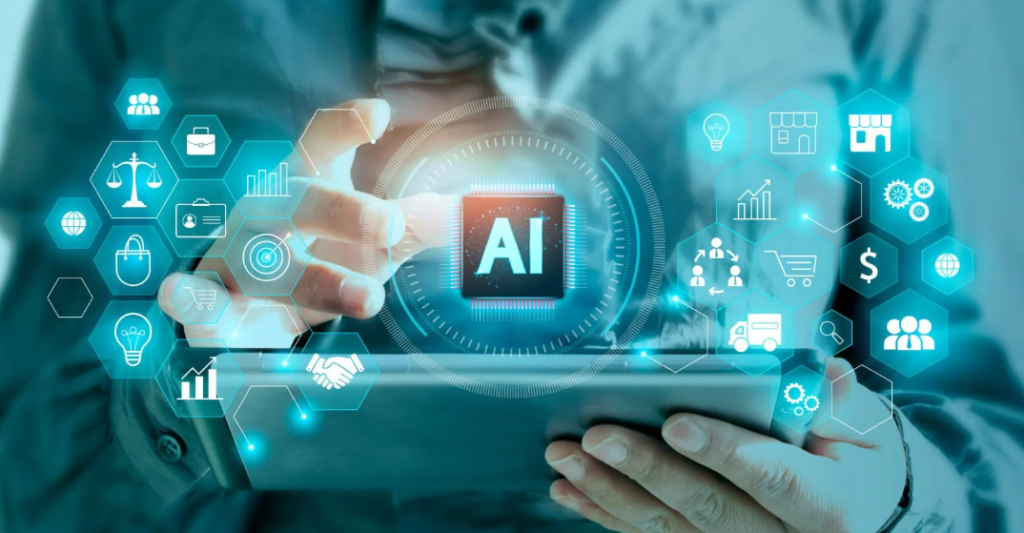
If you don’t know how AI works, you’re not alone. Let’s begin with the fundamentals: AI stands for Artificial Intelligence. AI can perform human-like tasks while also reacting to and adapting to changes in the data it is given.
Here, we discuss the top 10 AI tools you should use in 2026.
OpenAI- ChatGPT
ChatGPT will remain the most widely used AI assistant in 2026. It has evolved into a multi-purpose productivity engine that is used by freelancers, SMEs, agencies, and enterprise teams. Instead of managing multiple platforms, professionals can centralise tasks within ChatGPT.
It facilitates content generation, research, automation, coding and data analysis and even image generation – all in a conversational interface.
Key Benefits:
- Produces SEO blog posts, email marketing and marketing copy.
- Helps in coding, debugging and technical documentation.
- Summarises complicated documents and analyses spreadsheets.
- Deals with multi-step instructions and workflow planning.
ChatGPT is the core AI tool for businesses in Sweden, the UK, and Canada. It minimises overhead, increases speed, and enhances output quality across departments.
Anthropic – Claude
Claude is known for its strong reasoning capabilities and structured outputs. While most AI tools are designed to deliver answers quickly, Claude excels at processing analytical, long-form content.
This is particularly useful for professionals who work with large documents, compliance documents, research reports, or company plans.
Key Benefits:
- Deals with large documents with long context.
- Gives out structured and logical outputs.
- Concisely states the extensive reports.
- Favours documentation processes at the enterprise level.
Claude is a highly valued brand in respect-oriented markets such as the UK and the EU, known for its reliability and clarity.
Google-Gemini
Google Gemini is also a part of Google Workspace. For teams currently using Gmail, Docs, Sheets, and Meet, Gemini can complement their activities without disrupting workflow.
Users do not need to switch platforms; they can use AI directly within familiar tools.
Key Benefits:
- Categorises Gmail email conversations.
- Creates meeting notes on Google Meet.
- Process Data analysis within Google Sheets.
- Helps create content in Docs.
In remote teams and startups in the West, such seamless integration makes collaboration more efficient.
Jasper
Jasper is tailored to the marketers and content teams. Jasper works on brand consistency and marketing processes, unlike other general AI assistants.
Companies around the world use it to scale content production and maintain tone and messaging quality.
Key Benefits:
- Creates blog posts that are optimised for SEO.
- Writes advertisements and e-mail messages.
- Has regular brand voice.
- Propositions marketing-specific templates.
Jasper is beneficial for firms aiming to operate in English-speaking markets because it helps them remain competitive in search engine results.
Perplexity AI
Perplexity AI is ideal for research-intensive tasks, as it integrates AI-generated answers with references. Credibility is a key ranking factor in SEO and a key driver of brand authority in 2026.
Instead of merely producing text, Perplexity offers insights that are useful to analysts, bloggers, and consultants.
Key Benefits:
- Gives quoted research findings.
- Rapidly accelerates the competitive analysis.
- Funds scholar and research studies.
- Saves time in fact-checking.
In Western markets where reliability and transparency are important, Perplexity is one of the best AI tools that enhances content reliability.
Midjourney
Midjourney is also one of the most advanced AI image generation sites. It enables companies to develop original images even without employing expansive creative departments.
Midjourney is used to speed up the design ideation process through banners on the website, campaign images, and more.
Key Benefits:
- Produces quality innovative visuals.
- Sponsors’ branding and campaign resources.
- Helps conceptualise designs.
- Eliminates dependence on the inventory images.
Effective visual branding can significantly increase engagement rates among digital marketers worldwide.
Canva
The world of AI tools makes a U-turn with the existence of Canva. Canva has evolved into a creative platform powered by AI and a simple design tool. It is especially useful for small and medium-sized companies that lack a dedicated design department.
Its AI capabilities generate layouts, layout design recommendations and content formatting.
Key Benefits:
- Provides professional marketing graphics.
- Creates intelligent presentation slides.
- Auto-lays out adjustments to layouts and design.
- Ease of brand kit management.
Canva will enable non-designers to create high-quality, professional designs quickly.
Runway
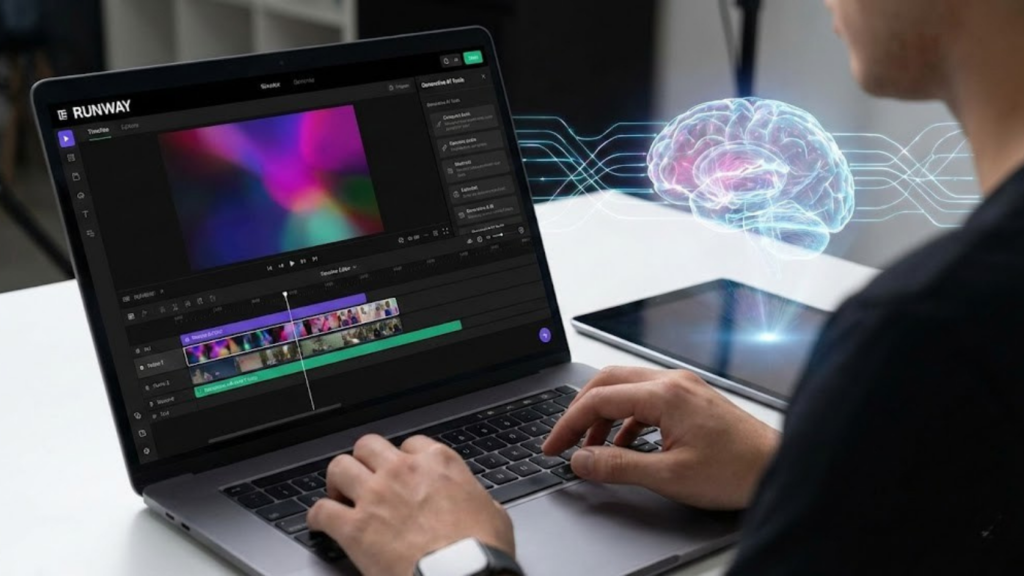
In 2026, video still reigns in digital marketing. Runway enables companies to create and edit videos using AI tools.
Rather than using complex editing software, users can create video content automatically from text captures and standardised effects.
Key Benefits:
- Creates video content with the help of artificial intelligence.
- Background and scene editing are automated.
- Rapidly increases the creation of short-form videos.
- Eliminates the requirement of advanced editing skills.
For brands focusing on social media engagement, Runway significantly shortens production cycles.
Synthesia
Synthesia specialises in AI-generated avatar videos. It is widely used for corporate training, onboarding, and product explainers.
Companies can produce professional-looking videos quickly, without hiring presenters or studio time.
Key Benefits:
- Develops AI presenters of avatars.
- Video productions Multilingual Supported.
- Minimalises the cost of training content.
- Facilitates localisation of video at scale.
For multinational businesses operating in Western markets, Synthesia streamlines communication.
Microsoft Copilot
Microsoft Copilot is built into Microsoft 365 applications, including Word, Excel, Teams, and PowerPoint. It is centrally dominant in a business setting.
Copilot does not replace workflows; it improves them.
Key Benefits:
- Instant analyses of Excel data.
- Creates PowerPoint presentations.
- Summarises Teams meetings
- Draft reports inside Word
For corporate teams in the UK and Canada, Copilot enhances collaboration and reduces repetitive manual work.
How to Build Your AI Stack in 2026
While all ten tools are powerful, you don’t need to adopt them all at once. Here are the suggested tools you can quickly use for your work.
- Intelligent chatbots: One general AI assistant (ChatGPT or Claude)
- A single content tool (Jasper or ChatGPT)
- Single design platform (Midjourney or Canva).
- A single video game (Runway or Synthesia).
- A single enterprise workflow system (Microsoft Copilot or Gemini).
The key is integration. Complementary tools eliminate the friction and maximise productivity. You need to decide what best fits your needs. The AI tools discussed above are the most important tools for every individual.
Conclusion
The “AI tool” of 2026 is less new and more of an infrastructural component. They create content faster, improve operational efficiency, lower production costs, increase marketing ROI, and enhance customer engagement.
The best AI tools in 2026 are not productivity tools, but growth tools. Students who learn to use them efficiently will work smarter, faster, and more competitively than ever before.
The AI change is no longer near. It is already here. Whether you will rule or follow others is the only question: whether you will utilise these tools to lead.


3 Comments