Disclaimer: This content is for informational and educational purposes only and should not be considered financial or investment advice. Always conduct your own research and consult a qualified financial professional before making any investment decisions.
Cyber awareness is no longer optional in 2026. In the age of artificial intelligence, where threats evolve faster than ever, organizations must rely on a strong human firewall to defend against modern cyber risks.
Living in a world where artificial intelligence (AI) is driving our smartphones, smart cities, and even our fridges, cybersecurity has become a frontline issue not only for businesses and governments but for each and every person. Cyber awareness is no longer a luxury, as cyber threats have become more sophisticated and frequent. It has evolved into a necessary skill.
Move to human firewall: the notion that individuals, as a result of vigilance, knowledge and behavioural intelligence, represent the most valuable defence against cybercrimes. The era of AI, when cyberattacks can be automated, adaptive, and undetectable, underscores the need to enhance human defences as a critical aspect of security, alongside technical measures.
This blog explains why and how the human firewall will transform cybersecurity in 2026, why cyber awareness is as important as ever, and what practical steps organisations and individuals can take to build a robust defence against online attacks.
What Is a Human Firewall In Cyber Awareness?
Human firewall will not be hardware or software- it will be a state of mind. It is individuals in an organisation (or society in general) who serve as the first line of defence against cyber threats by detecting and mitigating malicious activity.
Similar to the technical firewall that blocks the incoming and outgoing network traffic, a human firewall:
- Identifies behaviour that is suspicious.
- Anti-social engineering, manipulation.
- Eliminates human error that results in breaches.
- Takes initiative to enhance the security culture.
A human firewall is fundamentally motivated by cyber awareness, which is knowledge, perception, and behavior that help individuals recognise cyber risks and act on them.
The Future of Cyber Awareness in 2026
We should first understand the current landscape of cyber threats and the role of AI in transforming both arms of the digital confrontation before explaining the role of human firewalls.
AI: A Double-Edged Sword
Artificial intelligence has increased innovation across industries, such as healthcare, finance, and transportation. However, it has also turned out to be a potent weapon for hackers.
AI-driven attacks can:
- Spoof messages: create very believable phishing messages.
- Hack social capital on an unprecedented scale.
- Evade conventional detection security systems.
- Mimic human speech using deepfake technology.
These threats are not only hypothetical but also real and dynamic. Since attackers are leveraging machine learning to execute their attacks with greater stealth and precision, traditional defence mechanisms are always catching up.
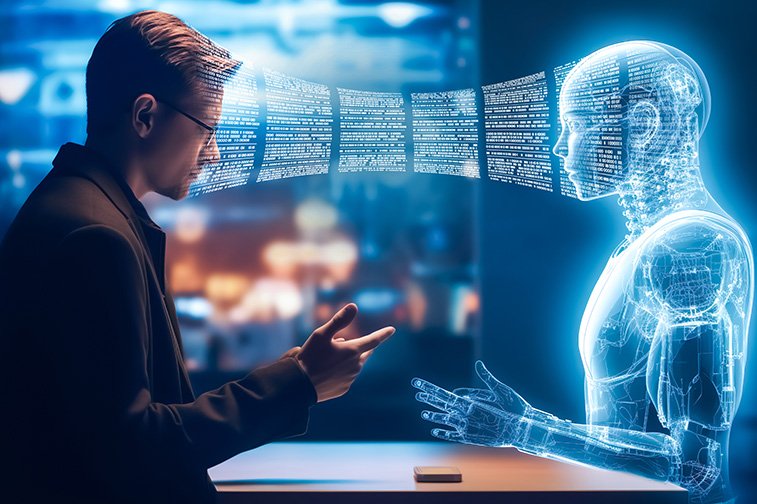
Here, human judgment comes in handy. Machines can learn patterns, but human beings can contextualise, ask questions about anomalies, and adjust to new threats.
Why Cyber Awareness Is Now a Strategic Priority
Cyber awareness might seem easy to pronounce, but by 2026, it will be an organisational necessity. Why?
The Weakest Link is still Human Error.
Most of the breaches, according to different industry reports, are still because of human error, clicking a rogue link, using the same passwords, becoming a victim of a hoax, or transferring confidential information to an insecure system.
Even a highly developed AI security system cannot make correct decisions without cyber awareness. A firewall will stop traffic; however, it will not stop a person under duress from providing their login credentials.
AI Increases the Effect of Human Choices.
In the case of AI systems, the potential errors of people can be multiplied:
- AI systems that are not properly configured may reveal whole datasets.
- Automation tools can be misused by poorly trained staff.
- Chatbots are deceived into disclosing company processes.
The more digital systems are connected, the more important human decisions are in ensuring security.
The Elements of Good Cyber Consciousness.
Developing strong cyber awareness cannot be achieved through a single training session alone. It is a multi-layered, continuous process that involves the commitment of both individuals and institutions.
The following are important elements of a proper cyber awareness strategy:
Knowledge of Threats
Individuals should know what they are fighting against, and these include:
- Phishing and spear-phishing
- Ransomware
- Social engineering
- Insider threats
- Malware and viruses
- AI-driven scams
Proper cyber awareness initiatives break down these dangers into real-life situations that are easy to relate to; hence, both non-technical and technical employees can be aware of them.
Perceiving Personal Responsibility.
A human firewall is not passive; it is active and responsible. This means:
- Being aware of who, when, and how to report suspicious activity.
- Knowledge of the individual’s role in data security.
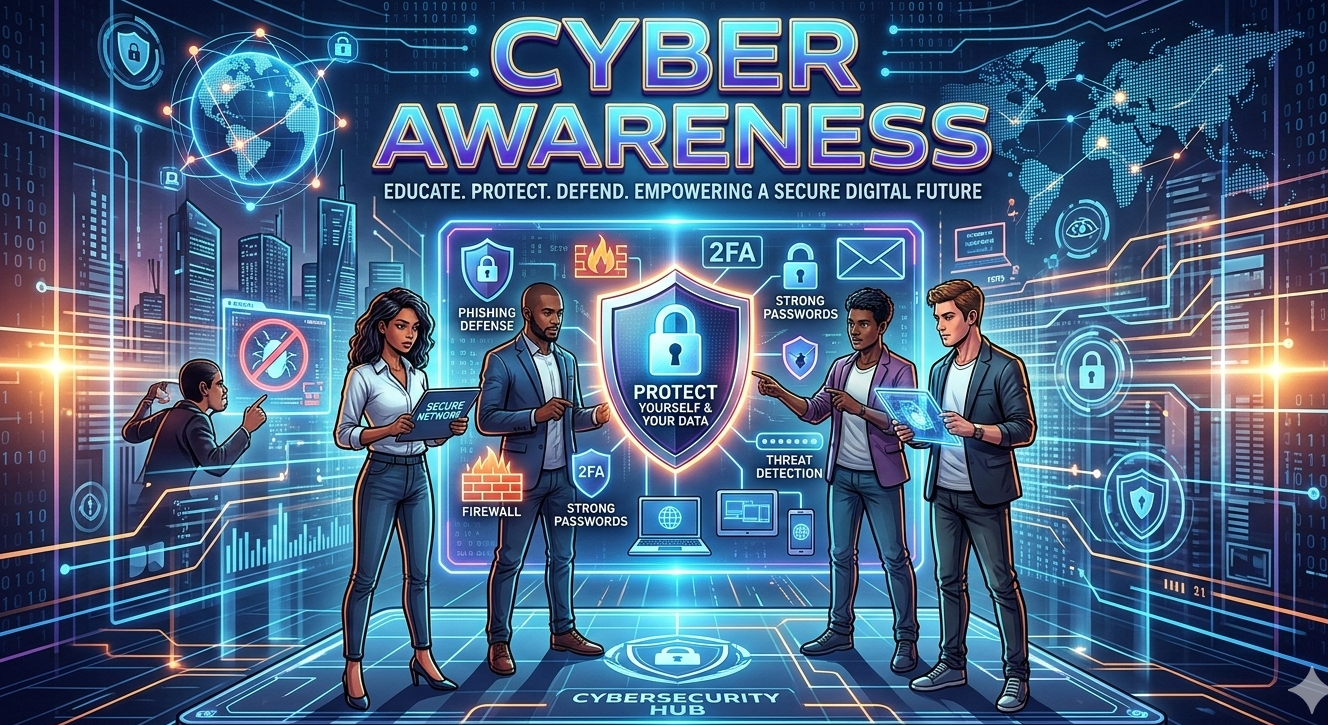
- Being serious about security practices (e.g., strong passwords, two-factor authentication).
Responsible awareness should not exist: knowing but not doing is not the way to prevent threats.
Behavioral Awareness
It is the highest stage of cyber awareness that one realises how human feelings: fear, curiosity, urgency, and authority can be used in an attack.
Indicatively, a fraudulent scheme that imitates an executive’s voice to coerce staff into financial commitments is successful because it leverages human psychology.
In order to develop behavioural awareness:
- Educate the population on the concept of social engineering.
- Think before responding to computerised prompts.
- Train real attack simulations.
Continuous Education & Reinforcement.
Cyber threats do not remain at the same level. Cyber Awareness programs ought to be:
- Regularly updated
- Interactive and engaging
- Simulated scenarios were tested.
- Personalised to job roles
This can help ensure cyber awareness becomes an organisational culture rather than a checklist item.
The Role of Organizations in Building a Human Firewall
To companies, strategy, investment and leadership are needed to enhance the human firewall.
Executive Buy-In
There should be top management in the sense-making process for cyber awareness. Leaders should:
- Enhance cyber awareness as a strategic goal.
- Budget allocated for training and tools.
- Establish clear policies and expectations.
Employees tend to emulate their leaders when they notice that leaders care about matters affecting their security.
Customised Training Disciplines.
The risks to all employees are not equal. Relevance is achieved by customised training:
- Developers are taught how to code securely.
- Finance teams are taught to identify fraud in payments.
- Customer care departments are taught to check identities.
Individual training improves involvement and productivity.
Gamification and Engagement.
Old-fashioned training may be monotonous. The best organisations include:
- Gamified quizzes
- Reward systems
- Cyber awareness dashboards
Real-world simulations
These methods make learning fun and help establish secure behavior in the long term.
Metrics and Feedback
Would you know whether your human firewall is effective? By measuring it.
Key metrics include:
- Simulation success rate in phishing.
- Count of reported incidents.
- The time it takes to identify threats.
- Adherence to security measures.
The feedback loops enable an organization to adjust its cyber awareness programs based on actual data.
Artificial Intelligence as a Partner in Cyber Consciousness.
Although AI-enabled attackers are also providing strong weapons to reinforce defenses and enhance human capabilities.
AI-Driven Threat Detection
AI is capable of examining trends in real-time and notifying human defenders of:
- Unusual login attempts
- Suspicious data movement
- Unknown devices on networks
- Zero-day attack signals
This enables human beings to concentrate on judgment, investigation, and reaction, not just detection.
One-on-One Learning through AI Tutors.
Large language models can provide adaptive experiences in learning and can adjust:
- Difficulty level
- Topic focus
- Personalized pacing
- Job function-based context.
This turns cyber awareness training from generic modules into personal development avenues.
Predictive Behavioral Tools.
AI can assist in forecasting the dangerous behavior of users: e.g.:
- Users who consistently disregard the warnings.
- Weak credentials usage in accounts.
- Workers who work in areas that are not secure often.
AI can identify pre-emptive interventions by identifying risk patterns.
Ethics and Problems in developing human firewall.
A human firewall is not easy to build, even with sophisticated tools.
Privacy Concerns
Surveillance can be an issue with monitoring tools employed to monitor user behavior. Organizations have to balance security and the privacy of personal data.
Cognitive Overload
Excessive information or alerts may overwhelm people, leading to alert fatigue. Training should be slowed down and put into context to prevent burnout.
Cultural Resistance
Discussing cyber threats can be intimidating or complex in certain workplaces. The leaders should be able to streamline communication and establish a secure learning and reporting environment.
Responsibility at the Individual Level: What You Can Do Today.
The issue of cybersecurity is not merely an organizational issue; personal cyber awareness is important. The following are some useful measures that can be adopted:
Use Strong, Unique Passwords
Password managers can generate and save strong passwords, eliminating the need to rely on memory (and on identical passwords).
Two-Factor Authentication (2FA) Enable.
This provides an added layer of security, even if a password is stolen.
Think Before You Click
Pause and ask:
- Is this link expected?
- Did I verify the sender?
- Does the message induce a feeling of urgency?
These inquiries increase cyber consciousness in real time.
Keep Software Up-to-Date
Security patches are frequently found as updates – failure to apply them makes one more vulnerable.
Suspicious Activity Report.
Do not disregard emails or notifications that do not seem right; reporting can help avoid more severe consequences.
The Future of Human Firewalls.
As we move toward 2026 and beyond, the crossroads between human judgment and intelligent automation will be the key to cybersecurity’s success.
Collective Defense Ecosystems.
Organizations could begin exchanging anonymized threat information to build resilience. The human firewall will be developed as community defense rather than personal defense.
Biological-Digital Interactions and Risk.
As wearable technology and neural interfaces become more common, cyber awareness will extend beyond screens into all other spheres of life.
Lifelong Cyber Education
In the same way that it is now viewed as a necessity to be financially literate, being cyber-aware will be a fundamental skill taught in school, alongside other life skills.
TechDudi Insight
At TechDudi.com, we believe modern cybersecurity isn’t built only with code — it’s built with people who understand the risks of a digital-first world.
Stay informed. Stay human. Stay secure.