In today’s fast-paced digital world, choosing the right smartphone can make all the difference. If you’re confused between the iPhone 16 and the Samsung Galaxy S25, then this blog is for you. Your phone needs to be powerful, secure, and reliable, whether you are working with email, joining a video call, using documents, or using business applications to enhance productivity. The iPhone 16 and the Samsung Galaxy S25 are two flagship phones that are most discussed in 2026. Which is more business-friendly, though?
With this detailed comparison, we will drill down into each device, discuss its strengths and weaknesses in a business setting, and help you make the right decision based on practical requirements.
Why the iPhone 16 and Samsung Galaxy S25 Matter for Business Users in 2026
Mobile devices are no longer just communication tools; they are central to business operations. As a CEO, freelancer, entrepreneur, or member of a remote team, the smartphone you use affects productivity, teamwork, and even safety.
Two of the most powerful and feature-rich devices are the iPhone 16 (the flagship of the Apple company in 2026) and the Samsung Galaxy S25 (the response of Samsung to business-oriented phones). But which one is the most appropriate for your business needs?
We are going to dissect both smartphones in a detailed, unbiased way.
Design & Build Quality
iPhone 16- Sleek, Minimal, Premium.
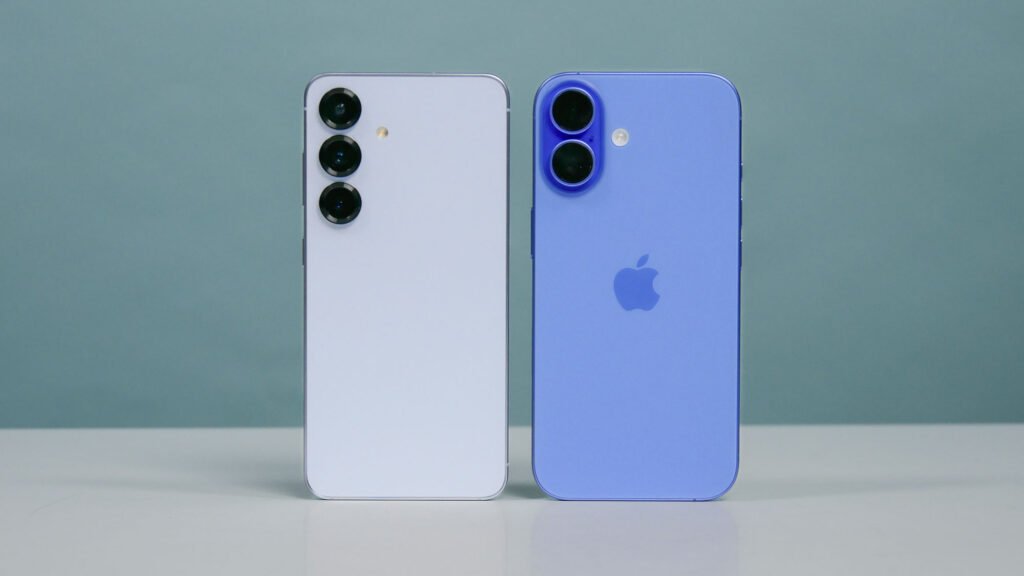
The iPhone 16 continues Apple’s reputation for high-end design. The smooth aluminium and glass construction is corporate and strong enough for use in the business environment, meetings, and travel. This makes it lightweight and firm at the same time, making it durable without compromising appearance.
Key design features include:
- Flat edge-to-edge display
- Ceramic Shield front to provide greater protection.
- Evenly distributed weight on either hand.
Samsung Galaxy S25: Business-Ready and Modern.
Samsung Galaxy S25 features high-quality materials and a sophisticated glass-and-metal sandwich design. The device is very luxurious to hold and slightly larger than the iPhone 16, which might be relevant to users who prefer big screens for multitasking.
The two phones are high-end, although Apple’s design is subdued, sometimes appealing more to business people who want an impressive, minimalist phone.
iPhone 16 is a little more business-friendly and sleek.
Display & Usability
iPhone 16 Display
Screen quality is one of the aspects in which Apple excels. The iPhone 16 has a sharp OLED display with colour accuracy that matches the life-like colours – great for presentation, document reading, and spreadsheets.
Display highlights:
- Adaptive brightness in the True Tone technology.
- Great external situational awareness.
- Smooth and sharp refresh rate.
Samsung Galaxy S25 Display
Samsung has also been at the forefront of the industry in terms of colourful screens, and the S25 does not break the tradition. Its AMOLED display is also brighter in colour and black hues, making it ideal for video conferences, presentations and multimedia content.
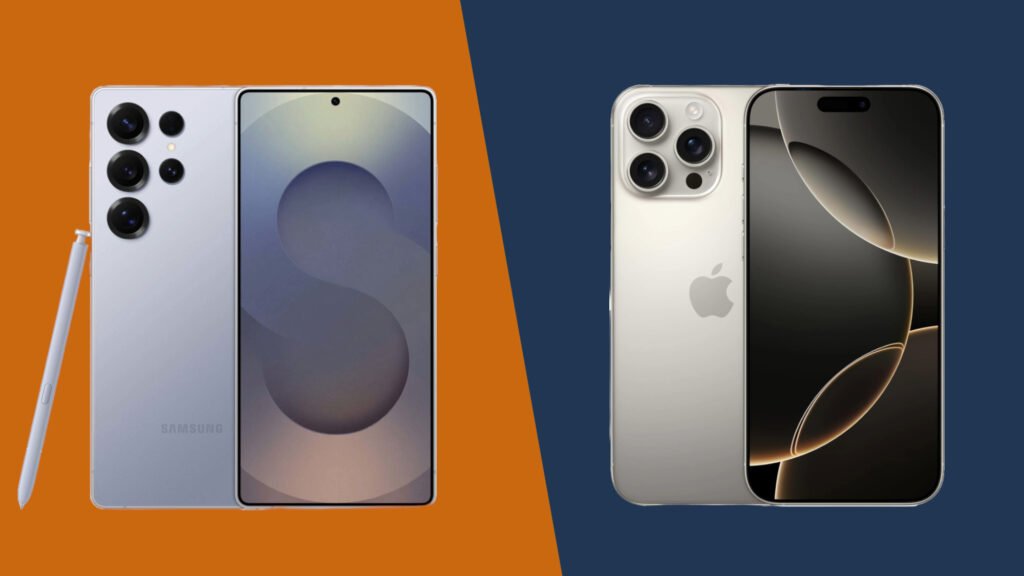
The Galaxy S25 can be slightly bigger in screen size, and it can be effective for reading documents, working in split-screen mode, or sketching (if it supports a stylus).
Samsung Galaxy S25 – the best one to have when doing multiple tasks and handling visual data.
Software & Ecosystem
The software ecosystem is of great importance to a business user. The iPhone 16 is released with iOS 18 (or newer), and it offers:
- In-built productivity applications (Mail, Calendar, Notes)
- Good integration with business applications, such as Microsoft Office, Teams, and Zoom.
- Close collaboration with MacOS and iOS.
When you base your business on Apple products (such as MacBooks or iPads), device integration will boost productivity.
Samsung Galaxy S25 – Bendable and Customizable.
Samsung operates Android based on its own UI. It offers:
- Deep customization
- Increased support for multiple user profiles.
- Distinct multitasking capabilities (dividend and floating windows).
Android is known for its flexibility, but at times this flexibility can be associated with random software updates and bloatware, which may not be what business people desire.
iPhone 16 consist improved updates and closer integration.
Security & Privacy
iPhone 16: Leading in Security
Business users are more concerned about security, and Apple has made extensive investments in privacy:
- Sensitive data must be secured in an Enclave.
- Frequent security updates
- Good application security.
As the number of cyber threats grows year after year, the iPhone 16 offers a sense of security with end-to-end encryption and a quick response to threats.
Samsung Galaxy S25- Solid, But Fragmented
Samsung has strong security features, including Knox, Secure Folder, and frequent updates. However, the larger Android ecosystem sometimes causes lagging on the updating front, which is an issue with enterprise implementation.
iPhones 16 – more reliable, business-friendly security.
Battery Life & Charging
iPhone 16 Battery Performance
The hardware-software ratio enables Apple to achieve good battery life despite heavy use. The iPhone 16 promotes rapid charging and efficient battery use to extend the day.
Highlights:
- Normal business applications with all-day battery life.
- Fast charging support
- Accessories such as wireless and MagSafe accessories are available.
Samsung Galaxy S25 Battery Benefit.
The Galaxy S25 usually comes with a larger battery and faster wired charging, giving it an edge for heavy users who need all-day battery life. There is flexibility through wireless and reverse wireless charging.
Both phones stand the test of time, even on busy days in business, but it is possible that Samsung can endure a little more when used heavily.
Samsung Galaxy S25 gives longer battery life and faster charging.
Connectivity & 5G
The iPhone 16 and the Samsung Galaxy S25 support:
- 5G connectivity
- Wi-Fi 6E or 7
- Bluetooth 5.x
- Contactless payments and NFC.
This translates to smooth connectivity among business travellers and remote groups, such as at a cafe, airport lounge or the office.
They are both highly connected.
Business Performance by Camera.
Cameras are not the business’s highest priority, but they are essential for video calls, document scanning, and whiteboard note-taking.
iPhone 16 Camera:
The high-quality natural colour reproduction, superior low-light capability, and leading video stabilisation are also a continuation of the strong camera used by Apple, which is most critical during remote meetings and presentations.
Samsung Galaxy S25 Camera: The cameras of Samsung are saturated, bright and very detailed. They also have advanced features such as document scanning and improved video features.
Both are capable, but the iPhone 16 often excels in real-world consistency — especially in video.
Cloud Support, Storage and File Management.
iPhone 16: The iPhone 16 is closely integrated with iCloud, making backing up files and collaborating simple. Applications such as Files introduce cohesiveness to cloud services.
Memory storage is usually between 128GB and 1TB, which is enough to store applications, files, and productivity software.
Samsung Galaxy S25: Samsung provides expandable memory (in select models) and strong cloud solutions (OneDrive, Google Drive, and Samsung Cloud). Android is flexible in file management, especially for power users.
Samsung Galaxy S25 has increased flexibility in the storage and management of files.
Conclusion
The iPhone 16 is the best option for business users who need a powerful, secure and futuristic phone. Its performance, productivity and ecosystem features make it the perfect employee at all levels.
Nevertheless, Samsung Galaxy S25 is a good competitor, particularly among people who are interested in the screen size, battery capacity, and storage versatility.
Regardless of the device you select, both are good flagships that will support business users exceptionally well in 2026 and beyond.