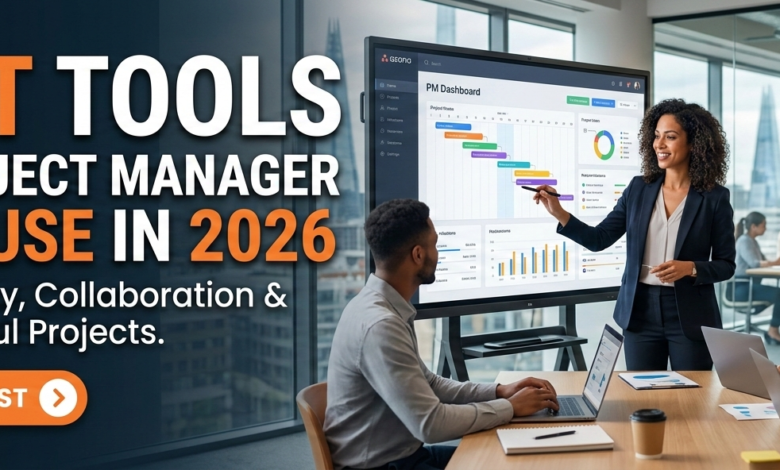
In today’s fast-paced digital world, managing projects has become more complex than ever. Teams are often distributed across different locations, deadlines are tighter, and businesses expect faster results. Due to these problems, the position of a project manager has changed significantly. Modern teams no longer have to use spreadsheets or email; instead, they rely on effective project management software to organize work, monitor progress, and enhance collaboration.
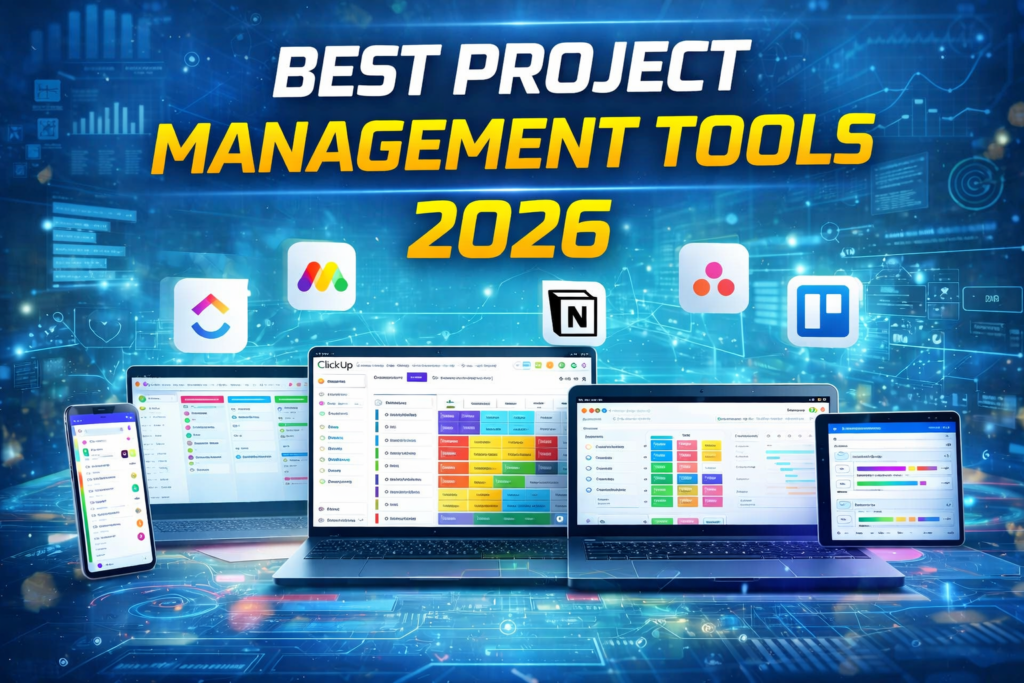
Project management software has become an indispensable element of companies of any size. Startups and international firms use digital platforms to organize workflows and ensure they enhance the efficiency of their projects. Monday.com, Asana, Trello, ClickUp, and Notion are all tools that integrate task management, automation, and collaboration features into a single platform and are among the most popular due to industry comparisons. The selection of the appropriate platform can greatly improve productivity and help teams deliver successful projects on time.
This guide will discuss the most appropriate tools every project manager should consider in 2026.
Why Project Management Tools Are Essential in 2026
It is necessary to find out why project management software has become such an essential element in businesses before delving into the specific tools.
Nowadays, projects are characterized by a variety of stakeholders, complicated processes, and vast amounts of data. The teams are easily lost on deadlines, responsibilities, and progress without proper organization. An excellent project management platform allows a project manager to plan the work and allocate duties, and track project progress.
The use of modern tools also provides visual dashboards, Gantt charts, and automation capabilities that make project planning easier. These characteristics enable teams to easily identify bottlenecks and re-adjust schedules as needed. There are also platforms compatible with communication tools such as Slack, Microsoft Teams, and Google Workspace that facilitate the work of remote teams.
To every practitioner in the field of project management, it is no longer a matter of choice, but one of the most important roles in contemporary project leadership.
Monday.com – Best for Visual Project Management
Monday.com has emerged as one of the most popular platforms for modern teams. It is devoted to visual project management, and it is easy to keep track of tasks, workflows, and progress on the boards developed by the teams.
The tool’s flexibility is one reason it is preferred by many organizations. Dashboards and reports will help a project manager to tailor workflows, automate repetitive operations, and monitor team performance. The platform also offers various perspectives, such as Kanban boards, timelines, and calendars, enabling teams to view their work from different angles.
Integration is another advantage. Monday.com integrates with hundreds of other apps, such as Slack, Zoom, and Google Drive. This is because teams can handle communication, files, and activities on a centralized platform.
Monday.com is also among the strongest products that the business can use to get a visually intuitive solution in 2026.
Asana – Optimized to Use in Organized Group Work.
Asana is another widely recognized project management platform known for its structured workflow system. Many organizations rely on Asana to organize tasks, track goals, and manage multiple projects simultaneously.
The platform enables a project manager to create tasks, assign duties, set schedules, and monitor progress using visual timelines. There is also the possibility of teams making subtasks and dependencies so that work is done in the right sequence.
There are also effective reporting functions asana has. Dashboards enable managers to track progress, identify delays, and analyze team productivity. Due to these features, companies that run large or complex projects tend to make use of the platform.
Asana remains a good and efficient tool for teams that require organized project planning and designated accountability.
Trello – Best for Simplicity
Complex tools are not always necessary in the project. Teams just need a simple way to organize tasks and work together. This is where Trello comes in.
Trello employs a Kanban board model that enables teams to handle activities using graphic cards. The project manager can set up boards for various projects and drag tasks across phases like To Do, In Progress, and Completed.
This is an uncomplicated solution that makes Trello one of the simplest tools to use. Although it is a basic application, it still offers features such as integrations, automation, and collaboration to help teams stay organized.
Startups, freelancers, and small businesses will find Trello appealing because it offers the most important project management tools without unnecessary features.
ClickUp – Best All-in-One Productivity Tool
Over the past several years, ClickUp has become an extremely popular app because it provides a single-stop productivity solution. Rather than using different tools to complete tasks, manage documentation and collaborate, teams can do all of it within ClickUp.
Using ClickUp, a project manager can plan projects, manage time, design documents, and create reports. There are also several views on the platform, such as list, calendar, Kanban, and Gantt charts.
Customization is one of ClickUp’s greatest strengths. The platform can be adapted to fit teams’ workflows and is applicable to both small start-ups and large organizations.
Due to its flexibility and robust capabilities, ClickUp is widely regarded as one of the most versatile project management tools on the market.
Notion – Optimal Knowledge and Project Management.
Notion is an exclusive application that brings together documentation, collaboration and project management in a single workspace. Startups and remote teams are particularly popular with it.
A project manager can also create project dashboards, organize tasks, record processes, and exchange knowledge between teams with the help of Notion. The platform’s flexibility allows users to create bespoke workflows that suit their needs within the organization.
The other benefit is teamwork. The teams can edit documents in real time, share ideas, and store all project information in one place.
Notion is a great option if the company wants a combination of project management and knowledge management on one platform.
Key Features Every Project Manager Should Look For
Choosing the right tool depends on your team’s needs, but there are several key features that every project manager should consider when selecting project management software.
To begin with, task management is a prerequisite. The ability to develop tasks, allocate duties, and measure progress ensures that each person understands what should be done.
Secondly, collaboration characteristics are essential to contemporary teams. Messaging, file sharing, and real-time updates keep teams connected even when they work from home.
Another significant feature is automation. Lots of tools enable managers nowadays to automate repetitive procedures, including status updates, notifications, and task assignments. This saves time and minimizes manual labour.
Lastly, analytics and reporting play a vital role in monitoring a project’s performance. Detailed reports give managers an opportunity to analyze productivity, identify delays, and better plan their future projects.
Project Management Tools of the Future.
Project management technology is still rapidly developing. Most platforms are incorporating artificial intelligence to enhance workflow automation and decision-making in 2026.
AI can process project data, anticipate project delays, and recommend workflow improvements. The features assist a project manager in making superior decisions and keep the projects on track.
Remote collaboration is another trend that is on the rise. With the increasing number of companies implementing hybrid work models, the features and tools of project management are emphasizing those that accommodate distributed teams.
These inventions are changing how projects are designed and implemented, and contemporary tools are stronger than ever.
Conclusion
Project management tools have become key to the contemporary business. They enable teams to be organized, work together, and deliver projects on time.
Platforms like Monday.com, Asana, Trello, ClickUp, Notion, Jira, and Wrike provide robust functionality to support various teams and processes. When a project manager selects an appropriate tool, productivity can be greatly enhanced and the project delivered successfully.
With the ever-changing technology, project management software will be more intelligent and automated. For professionals in project management, staying up to date with the latest tools and technologies will be critical to effectively manage projects in the future.
FAQs
What tools does a project manager use in 2026?
Project management tools such as Monday.com, Asana, Trello, ClickUp, and Jira help project managers organize work, track progress, and collaborate with other team members. The tools are used to control the timelines, automate processes, and enhance inter-team communication.
What is the significance of project management tools to a project manager?
Project management tools assist a project manager in planning the work, allocating responsibilities, and observing the project development in real time. They also minimize miscommunication, enhance transparency, and ensure projects are completed on time.
Which project management tool should one start with as a beginner?
Trello and Asana are considered the simplest tools for beginners. Their easy-to-use, user-friendly interfaces are quick to help a new project manager learn how to develop tasks, allocate team members, and monitor progress.
Are project management tools useful to small businesses?
Project management tools are also very handy for small businesses. They enable a project manager to plan workflows, utilize available resources efficiently, and keep projects on track without complicated systems.
What are the skills that a project manager should possess in 2026?
A successful project manager should be skilled in 2026, with the requirements being leadership, time management, communication and knowledge of digital project management tools. Automation, collaboration with a remote team, and data analysis are also becoming significant issues.