The modern business world is busy, and it is easy to get confused when organizing opportunities, leads, and client interactions. All incomplete follow-ups and overlooked details may result in losing a high-value deal. This is why deal management software has become a necessity for sales teams and businesses aiming to streamline revenue.
In this comprehensive blog post, we will look at what deal management software is, how it works, its main features, its business advantages, implementation plans, and future trends. This guide will help you realize that deal management software can help you overhaul your sales processes, make them more efficient, and close more sales, regardless of whether you are a sales manager, business owner, or decision-maker.
What Is Deal Management Software?
Deal management software is an online application that assists companies in tracking, handle and examining sales prospects from the first lead contact to final closure. This software is not like the old ways of using spreadsheets or manual work. All deal-related information is centralized, so teams can work together effectively, have visibility, and stay organized.
Essentially, deal management software helps sales teams track deal progression, document client interactions, assign tasks, and predict revenue. It provides a single source of truth, ensuring no opportunity is left behind. The features most modern platforms offer are workflow automation, CRM integration, a reporting dashboard, and AI-driven insights to help teams make informed decisions.
The major functions of deal management software are:
- Monitoring stages of a deal between lead and close.
- Concentrating on client communications.
- Follow-ups and reminders can be automated.
- Preparation of performance and revenue reports.
- Combining with CRM and marketing systems.
Through deal management software, companies can automate sales processes, enhance transparency, and devote more attention to finalizing deals rather than paperwork.
Core Features of Deal Management Software
Modern deal management software will offer a wide range of features to enhance efficiency, visibility, and collaboration among sales teams. Knowledge of these features helps businesses select an appropriate platform for their needs.
Pipeline Visualization:
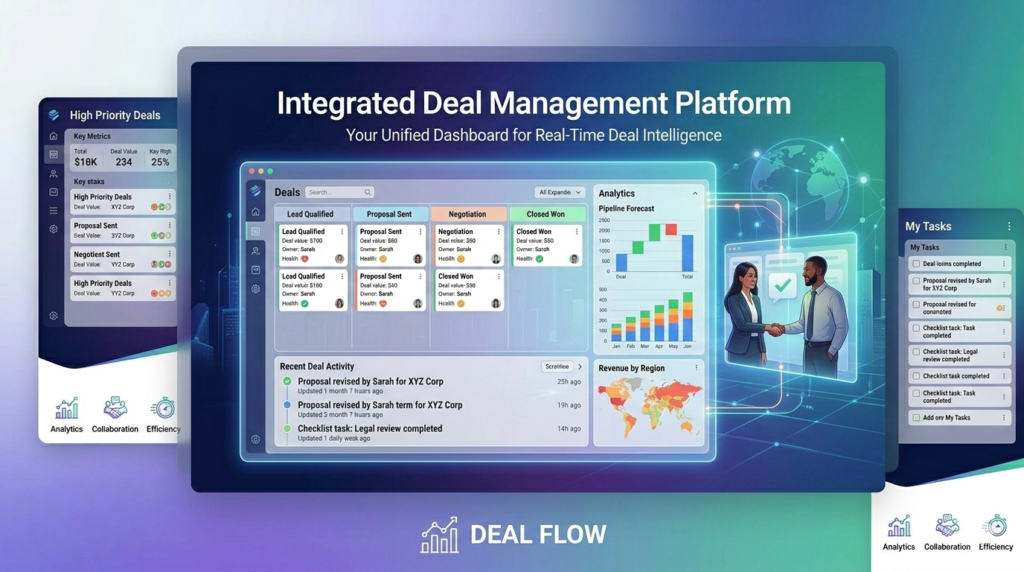
A picture of the sales pipeline will enable the teams to view the deals at each stage, from prospecting through negotiation to closure. It helps identify bottlenecks quickly and prioritizes deals.
Automated Task Management:
The deal management software will help automate routine operations such as reminder messages, email templates, and document excerpts. This minimizes errors in manuals and gives the sales representatives time to engage in activities of high value.
CRM Integration:
The integration will be seamless with CRM systems, and all customer data, communication history, and deal information will be synchronized. This provides a single sales, marketing and support workflow.
High-level Reporting/Analytics:
Companies can use detailed dashboards and analytics to monitor performance metrics, track the deal conversion rate, and predict revenue. These understandings can assist sales managers in making data-driven decisions.
Collaboration Tools:
Intranet communication, file matching, and commenting on teams promote inter-departmental coordination. Sales teams can synchronize strategies and ensure no deal information is lost.
Through these features, deal management software can not only streamline deal management but also enhance decision-making, speed up the sales cycle, and increase employee productivity.
Benefits of Implementing Deal Management Software
Implementing deal management software offers significant advantages for both sales teams and the organization as a whole. It helps businesses increase revenue, reduce errors, and strengthen customer relationships by offering structure and insights.
Automated Sales Procedures.
Deal management software manages leads, deals, and client interactions on a single platform. Automation of work processes ensures that all tasks are completed on time, follow-ups are regular, and no opportunity is lost.
Enhanced Collaboration
Sales transactions often involve the efforts of multiple people or departments. Deal management software enhances collaboration through the same dashboards, internal messaging, and real-time updates, thereby minimizing communication gaps.
Better Forecasting and Decision Making.
Monitoring deal progress and past performance enables managers to accurately predict revenue. Deal management software is used to get insights into which deals will close and which ones require intervention to make strategic decisions.
Increased Productivity
Repetitive activities can be automated through email follow-ups, document approvals, and reminders, giving the sales representative an opportunity to interact with the client and close deals.
Better Customer Experience
Systematic tracking of deals enables timely communication with prospects and personalized interactions. A professional, hassle-free procedure will build more customer confidence and enhance the chances of closing a deal.
Simply, deal management software changes sales teams into active revenue generators, rather than passive operators.
The way Deal Management Software works.
Deal management software is achieved through the centralization and automation of the whole sales lifecycle. Every step is tracked in the system, from the initial contact with a prospect through the designation of a deal.
It will start with capturing leads, in which leads will be automatically added to the platform through websites, emails, or CRM systems. The sales representatives can then delegate these leads to team members and work them through the prescribed deal steps. All clients’ interactions, notes, and documents are registered in a single software application.
Automated reminders and notifications will ensure that no follow-up is missed. As an illustration, when a prospect fails to respond within a given period, the system can send an email or a task to the agent assigned to handle it. The trends analyzed by reporting dashboards include win/loss ratios, average time to close a deal, and pipeline value, which management can act on.
The major aspects of the deal management workflow are:
- Lead capture and assignment
- Deal stage tracking
- Automatic alerts and a computerized schedule.
- Tracking of communication (emails, calls, meetings).
- Reporting, prediction and analytics.
Deal management software streamlines all these processes, making them automatic and structured in order to minimize human error and enhance efficiency and speed in closing the deal.
The Selection of the Deal Management Software.
The choice of the deal management software must be based on the size of the business, the complexity of sales, and the technical requirements. Not all solutions are universal in an organization; a good assessment is very important.
Key Considerations:
- Scalability: Ensure the software scales with your business, handling more deals and users.
- Integration: Make sure it is compatible with your CRM, communication tools and marketing automation.
- Easy-to-Use Interface: The platform will be intuitive and easy to adopt.
- Automation Features: Place a priority on automating repetitive tasks, reminders, and approvals.
- Reporting & analytics: Dashboards and customized reports improve decision-making.
Some common deal management solutions include Salesforce, HubSpot Sales Hub, Pipedrive, Zoho CRM, and Monday Sales CRM. Both platforms have different specifications depending on business size and sector.
Deal Management Software for Different Industries
Deal management software is not limited to traditional sales teams; it has applications across multiple industries.
- Real Estate: Monitor real estate transactions, communications with clients and closing dates effectively.
- Financial Services: Operate investment opportunities, customer portfolios and regulatory compliance.
- Software & SaaS: Track subscription transactions, renewal funnels, and customer acquisition.
- Manufacturing & B2B Sales: Monitor long-term contracts, procurement deals and multi-step negotiations.
Deal management software enables more deals to be closed by industry by customizing workflows and reporting for specific industries, ensuring that every team can close more deals faster and more effectively.
Deal management trends in the future.
AI, automation, and improved analytics are the future of deal management software. Predictive insights will enable the sales teams to make high-value deals ahead of the competition. Repetitive workflows will be automated, allowing reps to focus on relationship-building and strategy.
Additional trends are cloud-based systems, remote team accessibility via mobile devices and integration with collaboration tools. Firms that invest in new deal management systems will be better positioned to navigate emerging sales environments and stay at the top.
Conclusion
In a world where all sales opportunities matter, deal management software gives businesses the framework, visibility and intelligence necessary to close more deals in less time. Its benefits are hard to ignore, whether it comes to streamlining processes and maximizing collaboration, or to better forecasting and customer experience.
A combination of the appropriate platform, the best practices, and the use of automation will help organizations to make their sales operation not reactive but proactive, which will result in an increase in revenues and success in the long run.
Making an investment in deal management software today is a sure way to achieve a smarter sales process, stronger customer relationships, and better business performance tomorrow.








One Comment