In the modern digital dynamic environment, businesses do not merely use networks, but need them all. Whether it is the transmission of emails, the use of cloud-based applications, or the operation of remote teams, a reliable network is the silent force behind everyday activities. However, what will occur when that engine decreases in speed or suddenly quits moving? It increases frustration, slows production, and can hit income immediately. It is precisely the reason why networking monitoring is more significant than ever.
In this blog, we will discuss everything you need to know about network monitoring: what it is, how it works, why it is important, and how it can revamp the way organizations operate their IT infrastructure. Unlike responding to issues when they interrupt your workflow, network monitoring has enabled businesses to identify issues before they happen, avoid downtime, and ensure they stay up and running.
We shall also explore the main characteristics of networking monitoring applications, the business advantages they provide, how to select the appropriate solution that suits your needs, and the emerging technology trends defining this technology.
What Is Networking Monitoring and Why Does It Matter
The current networking monitoring software offers a wide range of features intended to give IT teams full visibility and control over their networks. In its simplest form, network monitoring involves gathering performance data and transforming it into actionable information. Nevertheless, more sophisticated tools extend beyond simple monitoring to offer automation, analytics, and predictive capabilities.
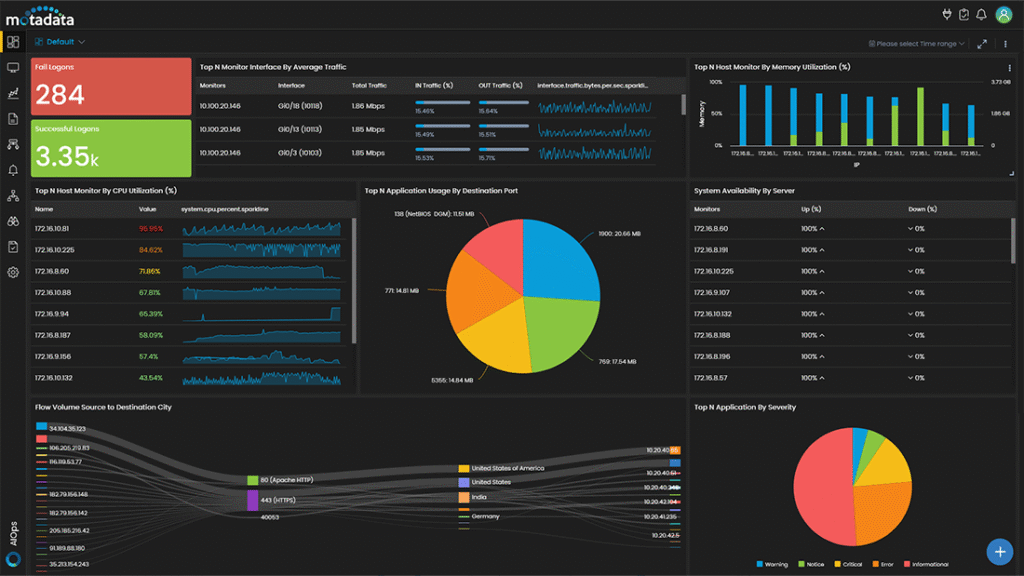
Real-time monitoring dashboards are one of the most important characteristics. Such dashboards incur data like latency, packet loss, bandwidth usage, CPU load as well as uptime. Using network monitoring, administrators can detect bottlenecks or failed devices in real time. Another vital element is automated alerts that notify the IT team by email or SMS, or via collaboration tools, whenever the pre-established thresholds are surpassed.
Key aspects of networking monitoring include:
- Real-time performance tracking
- Automated alerts for failures
- Traffic and bandwidth analysis
- Device availability checks
- Security event detection
Networking monitoring software leverages these capabilities to convert raw data into strategic decision-making tools.
Core Features of Networking Monitoring Software
Network monitoring is no longer an IT upgrade but a strategic choice that can directly affect business performance, security, and growth. Once organizations have real-time access to their infrastructure, they will be in a position to move past problem fixing and prevent them. The main advantages of network monitoring, as discussed below, are business-oriented.
Reduced Downtime with Proactive Networking Monitoring
Unexpected downtime may affect operations, delay projects, and undermine customer trust. Early warning of network abnormalities, such as spikes in network traffic, failed equipment, or bandwidth overload, can be detected through network monitoring before they go out of control. IT teams will be able to respond to problems beforehand, rather than scramble in case of an emergency. This goes a long way in minimizing the time lost and maintaining business.
Improved Performance Through Real-Time Networking Monitoring
The delayed system irritates the workers and the consumers. Network monitoring allows businesses to monitor latency, packet loss, and bandwidth consumption in real time. This visibility enables teams to maximize traffic, prioritize essential applications, and remove bottlenecks. This leads to a general increase in network performance and enhanced productivity and user satisfaction.
Enhanced Security and Threat Detection
Network monitoring provides clear details on resource usage. Businesses can identify which systems are underutilized or overloaded and make the appropriate changes. This eliminates unnecessary hardware expenditure and, at the same time, ensures essential systems receive adequate bandwidth.
Wiser Choices with Data Intelligence.
Networking monitoring software provides leaders with historical reports to make informed decisions about infrastructure. Capacity planning for growth plans, correct data is used to support long term business expansion and scaling.
Benefits of Implementing Networking Monitoring in Businesses
In a truly globalized business environment, networking monitoring is not merely a technical enhancement; it is a strategic carve in stability, performance and growth. Organizations today are highly dependent on system connectivity; the system must remain continuous to operate applications, handle communications, and serve customers. The failure or slowness of the networks may have an immediate and expensive impact. Network monitoring provides the transparency and management needed to avoid such interruptions and ensure operational excellence. The following are the major advantages elaborated below.
Early Signal Attack and Minimized Downtime.
The ability to identify problems before they get out of hand is often cited as one of the most desirable benefits of network monitoring. Rather than finding the problem later when employees are affected by disruptions, IT teams will get real-time notices of unusual activity or device failure or bandwidth overload. This is an aggressive strategy that minimizes downtimes and business continuity. By fixing minor problems early, businesses never experience major crashes that may affect revenue and customer loyalty.
High Performance and Productivity of Networks.
Slow systems may affect employees’ and customers’ efficiency. Network monitoring provides details on traffic flow, latency, packet loss, and bandwidth usage. With this information, organizations can identify bottlenecks and optimize performance. The most important applications can be prioritized, thus making the flow of work smooth within the departments. This leads to increased employee efficiency and the provision of quicker, more dependable services to customers.
Enhanced Security and Threat Visibility
The threatening activities of cybersecurity frequently manifest as abnormal network behavior. Monitoring the network identifies suspicious traffic patterns, unauthorized devices, and configuration changes in real time. Early detection also enhances security positioning and minimizes the chances of a data breach. The constant presence of businesses can help them respond to potential threats and protect sensitive information.
Improved Resource Sharing and Strategic Planning.
The software for networking monitoring provides detailed reports and the analysis of historical data. Such insights allow businesses to make sound decisions regarding infrastructure upgrades, bandwidth allocation, and future expansion. Companies no longer need to spend large sums of money on hardware they do not need, but can now allocate their resources based on actual usage. In the long term, this will result in cost reductions, better scalability, and smarter planning.
Future Trends in Networking Monitoring
The future of networking monitoring is being shaped by rapid technological advancements, particularly in artificial intelligence and cloud computing. Conventional reactive monitoring systems will also be transformed into smart, predictive systems that can detect problems before they affect users. The networking monitoring tools are automated and based on AI to analyse past trends and identify any anomaly to ensure that the intervention is done manually with minimal input.
The uptake of cloud is on the rise, and as such, it is increasingly in demand that cloud-native monitoring solutions be utilized. Contemporary network monitoring systems have been able to handle hybrid environments, thus enabling easy management of on-premises and cloud infrastructure. This leeway is vital as companies continue to increase their online platforms.
The other important trend is automation. Automated remediation allows systems to fix minor issues automatically and enhances efficiency and response times. Besides, cybersecurity integration is becoming increasingly sophisticated, as networking monitoring platforms are adopting threat intelligence and real-time risk analysis systems.
Emerging trends include:
- AI-powered predictive analytics
- Cloud-native monitoring platforms
- Automated incident response
- Integration with DevOps tools
- Enhanced cybersecurity analytics
With the emergence of more complex networks, network monitoring will continue to become smarter, more dynamic, and better able to enhance resilience, scalability, and long-term digital transformation.








One Comment