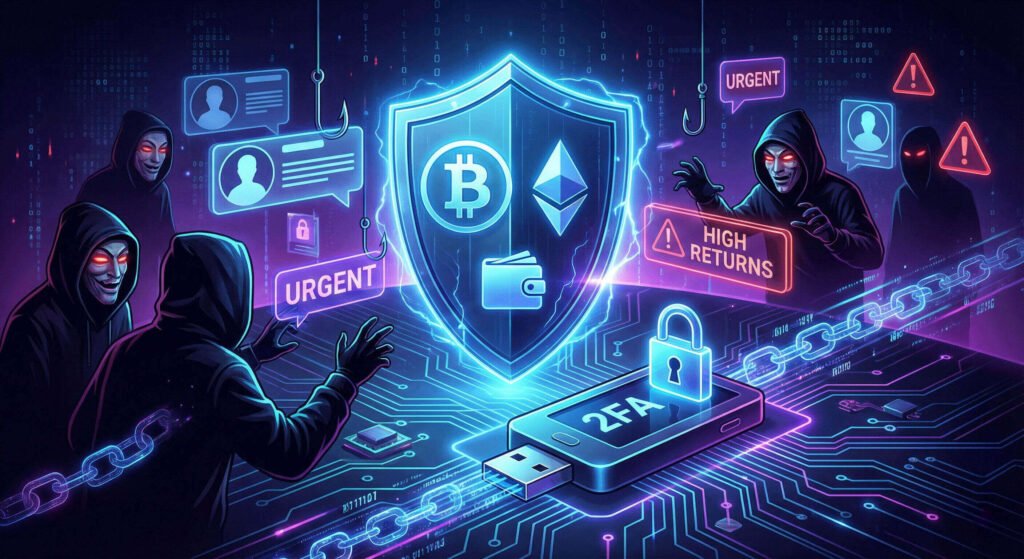
Bitcoin has changed how individuals perceive money, investments, and financial liberation. Over the past 10 years, digital currencies such as Bitcoin and Ethereum have attracted millions of investors worldwide. While the opportunities in the crypto market are exciting, there is also a darker side that every investor needs to understand the crypto scams.
As the popularity of cryptocurrencies grows, scammers become more sophisticated. They develop counterfeit sites, mimic reputable brands, and use deceptive lures to bilk unsuspecting users. It is a pity that thousands of individuals lose their money annually to crypto scams because they did not recognize the red flags.
The good news is that crypto scams are preventable if you learn how they operate and follow common security measures. This guide will assist you in identifying common scams, understanding the tricks scammers use, and securing your crypto investments.
The reason why Crypto Scams are rising.
It is only after understanding the reasons behind the increasing crypto scams that one can learn how to prevent them.
To begin with, cryptocurrency transactions are typically irreversible. Cryptos cannot be easily retrieved if they do not arrive at the wallet address after transmission. This renders digital currencies a good target for criminals.
Second, the crypto industry is rather new. Most novices get into investing without clearly defining the processes of blockchain, wallets, and exchanges. It is this ignorance that scammers exploit.
The other cause is the anonymity of blockchain networks. Although platforms such as Binance, Coinbase, and Kraken are highly regulated, numerous counterfeit sites emerge online that appear legitimate but are created solely to conduct crypto scams.
The first step to risk protection is to know these risks.
Common Types of Crypto Scams
To prevent crypto scams, you should be aware of the most common tricks scammers use.
Fake Investment Platforms
Fake investment websites are one of the most popular crypto scams. Such sites offer very high returns within a short period. They often show fake dashboards that display growing profits to convince users that their investment is working.
Nevertheless, when the user attempts to withdraw their funds, the service either blocks the account or requests additional payments. The fact is, the money has already been stolen.
Such frauds typically promote heavily on social media or messaging apps, claiming that their trading system is sure to make profits.
Phishing Attacks
Another significant type of crypto scam is phishing. The scammers in this attack use counterfeit emails or messages in the name of well-known businesses such as MetaMask or Coinbase.
The user is normally requested to confirm their account by clicking a link or resetting their password. The connection will take you to a counterfeit site that appears quite similar to the original. Scammers have full access to their accounts when the users provide their login information or wallet recovery password.
When the information is stolen, the attacker empties the wallet of all funds.
Giveaway Scams
The giveaway scams are very widespread on social media. Fraudsters are masquerading as well-known celebrities like Elon Musk or popular crypto firms.
According to them, when users send a specific quantity of cryptocurrency, they will be refunded in 2 times the amount as part of a promotional exercise.
As an illustration, the fraud may provide: send 0.1 Bitcoin, receive 0.2 Bitcoin immediately.
The truth is, there will never be a reputable company that asks you to send cryptocurrency so they can send more back. These cryptocurrency frauds rely on the appeal of excitement and urgency to lure individuals into taking action quickly.
Rug Pull Scams
A rug pull occurs when developers introduce a new cryptocurrency project, attract investors, and then take off with the money.
Such crypto-type scams are common with newly minted tokens on decentralized exchanges. It might seem that the project is valid at first, given its professional website and social media presence. However, when a sufficient number of individuals invest, the creators pull out all the liquidity and disappear.
Shareholders are left with worthless paper.
Fake Crypto Apps
The other type of increasing crypto scam is represented by counterfeit mobile applications. Fraudsters create apps that resemble famous crypto wallets or exchanges.
The app is downloaded, money is deposited, and later, users cannot access their money. The application just puts the money into the scammer’s wallet.
Avoid downloading crypto apps from unofficial websites or unknown app stores to reduce this risk.

Warning Signs of Crypto Scams
Although scammers are becoming more advanced, most crypto scams share common warning signs.
The assurance that profits will be guaranteed is one of the most alarming signals. Any cryptocurrency marketplace is a very unstable sector, and no honest investment can be expected to yield steady, high profits.
One more red flag is the rush to do it. Fraudsters often claim that an offer is scarce or that users need to act quickly to win a reward. This strategy does not allow victims to research the opportunity.
Cryo scams may also be portrayed by poor website design, spelling errors, and the unavailability of company information. If a platform fails to display its team members, location, and contacts, it might not be reliable.
Lastly, any request for a private key or recovery phrase is a clear indicator of fraud. It is a fact that no legitimate service will ever claim this information.
How Not to Fall Victim to Cryptoscams.
Not many technical skills are required to protect yourself against crypto scams. Some precautionary steps are very easy and can save you a lot of danger.
Do Your Research
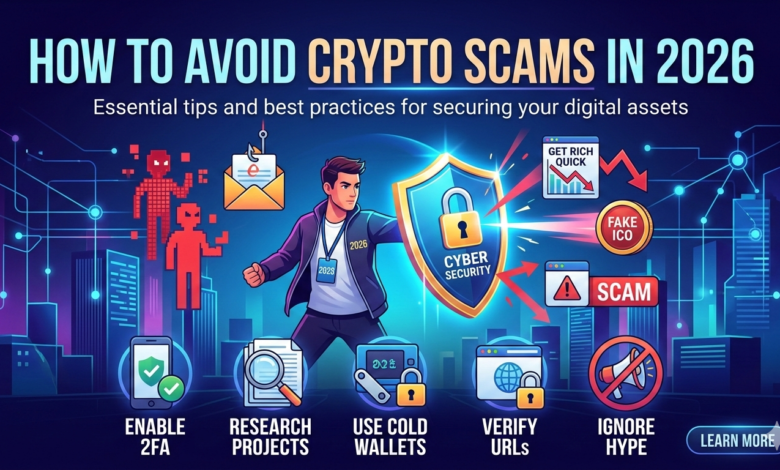
Before investing in any crypto project, take time to research it. Look at the project’s whitepaper, development team, and community presence.
Make sure the project is available on reputable sites such as CoinMarketCap or CoinGecko. On these sites, one can find useful information on cryptocurrencies, including market data and project details.
One more way to spot potential crypto scams before investing is to read reviews and discuss them with others.
Use Reputable Exchanges
Always buy and trade cryptocurrency through trusted exchanges. Exchange platforms like Coinbase, Binance and Kraken are highly regulated and secure.
Trading on unfamiliar or newly opened exchanges poses a greater risk of becoming a victim of crypto scams.
Activate Two-Factor Authentication.
Two-factor authentication (2FA) will provide an additional layer of security for your accounts. A scammer cannot access your account using the verification code, even if they have your password.
The majority of large cryptocurrency exchanges enable 2FA using applications such as Google Authenticator.
Guard Your Wallet Data.
The most vital security aspects of the cryptocurrency are your wallet keys, including the private keys and the recovery phrases you have. Your money can be controlled by anybody who has access to it.
Do not give out your recovery phrase to anybody, including those who claim to be customer support. Numerous crypto scams rely on luring users to disclose this information.
Avoid Offers That Sound Too Good to Be True
Once an investment opportunity offers very high profits with minimal or no risk, chances are it is a scam.
Emotional marketing is also used in many crypto scams to make people believe they are losing a life-changing opportunity. You do not need to lose thousands of dollars as time to check the offer and save your money.
The Role of Social Media in Crypto Scams
Social media can be considered a powerful channel for disseminating crypto scams. Fraudsters make accounts, posing as reputable organizations, and use misleading advertisements.
They frequently target novices eager to invest in cryptocurrency who lack experience.
Do not give in to crypto-related messages posted on such social networks as Telegram, WhatsApp, or Twitter. If any message requests personal information, investment funds, or wallet information, always verify the source before taking any action.
Conclusion
Cryptocurrency is a promising means of promoting financial development, though it is associated with risk. Scams in the crypto industry are becoming more advanced each year and targeting both novice and experienced investors.
Learning about the most common types of scams, recognizing potential warning signs, and adhering to the simplest security measures will help you considerably reduce your risk of becoming a victim.
Always check out before investing, rely on reputable dealers, hold onto the details of your wallet, and beware of unbelievable offers. The cryptocurrency market may be a worthwhile venture, but only with knowledge and prudent judgment.
Staying informed is the most powerful tool you have to protect yourself from crypto scams and build a safer future in the world of digital finance.
FAQs
What are crypto scams?
Cryptocurrency scams are financial schemes that steal cryptocurrencies from investors. Such frauds can be a bogus investment service, a phishing scheme, a giveaway scam, or a purported crypto project that vanishes with the money.
What are the ways of determining crypto scams?
Typical indicators of crypto scams include guaranteed returns, time-sensitive investments, celebrity endorsements, and demands for personal wallet keys or recovery phrases.
Can crypto scams be reported?
Yes, victims of crypto fraud can file reports with crypto exchanges, online fraud reporting agencies, and cybersecurity bodies. Reporting can save others from the trap.
Are crypto investments safe?
Cryptocurrency investments will be safe, provided that the appropriate security measures are implemented. Two-factor authentication, reliance on trusted interactions, and avoidance of suspicious deals can help prevent crypto scams.