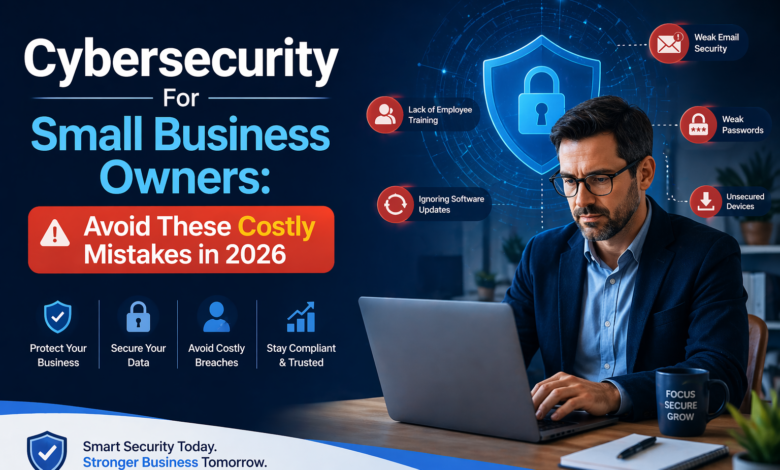
In 2026, it’s not enough for small businesses to focus on sales, marketing and growth. The truth is, most business owners overlook a potential threat – cyber attacks.
Small business owners generally think that hackers only go after big businesses. Sadly, this is another reason why small businesses are being targeted. But this is actually one of the reasons hackers target small businesses – because they are less secure and have less reliable security processes.
Failing to prioritise cybersecurity for small businesses can result in financial loss, customer information theft and even closure. A cyber attack can tarnish your reputation for good.
In this blog, we’ll explore the most common and costly mistakes that small businesses make, and how to avoid them before it’s too late.
Mistake #1: Assuming Your Business is Too Small
The first costly mistake is to think your business is “too small” for hackers.
Cybercriminals may not always go after the big fish. They may be looking for easier targets. Smaller businesses often lack established cybersecurity for small business systems and are easy prey.
A lot of cyber attacks are machine-based, meaning hackers are searching thousands of systems and websites for a weakness. Without the right security measures in place, your business is vulnerable – even if you don’t know it.
Recognising the need for cybersecurity for your small business is a good start.
Mistake #2: Not Paying Attention to Phishing
In 2016, phishing attacks were still a common attack, and many small businesses were still falling victim.
These are typically in the form of legitimate-looking emails. These can appear to be from financial institutions, customers or suppliers. Clicking on a link or giving login credentials gives hackers access to critical data.
Without training, just one click can jeopardise your entire network. To boost cybersecurity for small business practices, teach employees to identify and avoid suspicious emails and links. Simple training can prevent costly mistakes.
Mistake #3: Failing to Protect Against Ransomware
Ransomware is a rapidly increasing threat to small businesses. This type of malware encrypts your system and requires a ransom to unlock it.
It’s not something many business owners think will happen to them – until it does.
If you don’t take steps to protect against ransomware, you could lose access to essential documents, customers and your business. Even if you pay the ransom, there’s no assurance your data will be restored.
Effective small business cybersecurity measures, such as backups, monitoring and up-to-date security programs, can help prevent ransomware attacks.
Mistake #4: Weak Password Security Practices
Passwords are the first line of defence and are often neglected.
Weak passwords, password re-use, and not changing passwords regularly provide opportunities for hackers to gain access.
Enhancing password security isn’t hard. It begins with establishing unique and complex passwords and educating employees on the best practices.
Used alongside other cybersecurity for small business practices, strong passwords are a vital line of defence against cyber attacks.
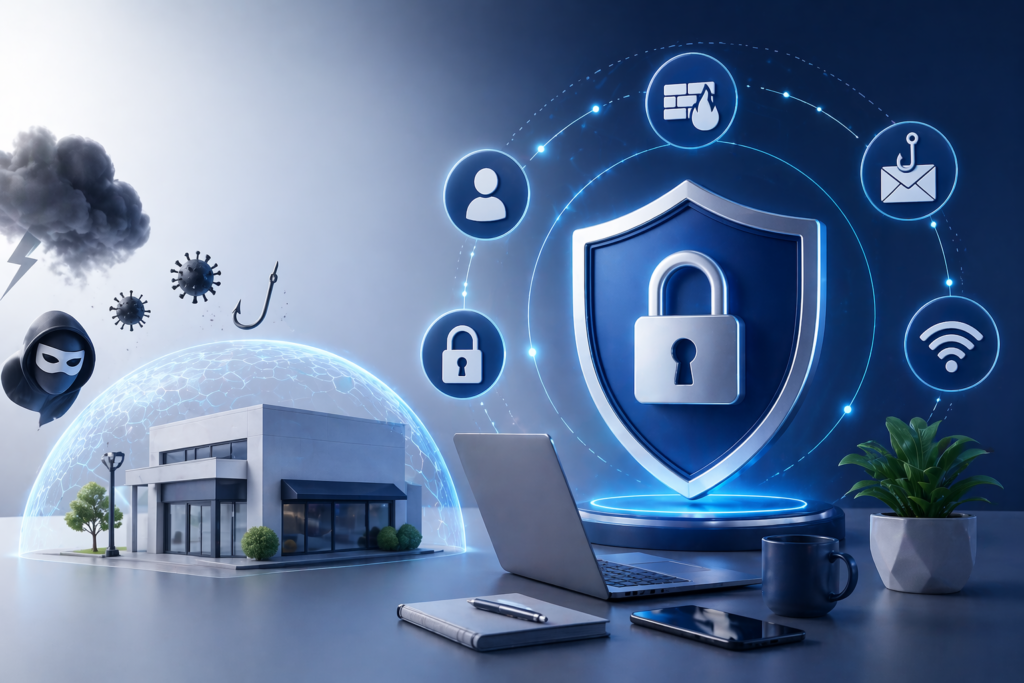
Mistake #5: Failing to Install a Firewall
A firewall helps block unauthorised traffic from your network. It helps protect your business from unauthorised access and other threats.
Unfortunately, many small businesses neglect to implement firewalls or have outdated firewalls that are ineffective.
Today’s cybersecurity for small business solutions includes next-generation firewalls that inspect traffic flowing in and out of the business, preventing any suspicious activity.
This is an easy, yet very effective, way to improve your security.
Mistake #6: Using Simple Antivirus Software
While installing antivirus software is a good first step, it’s not sufficient.
It is not enough to protect your business with a simple antivirus program because cyber threats have become more sophisticated. Today’s threats are more advanced and evade conventional security measures.
A small business cybersecurity strategy should be multi-faceted, using antivirus, monitoring and threat detection.
Antivirus is just one component of cybersecurity.
Mistake #7: Failing to Follow a Cybersecurity Checklist
Small business owners often lack a specific strategy to deal with security. This results in varying levels of security and vulnerabilities.
A cybersecurity checklist for small business owners can ensure you don’t overlook anything. It offers a systematic way to secure your IT environment, data and processes.
This includes regularly updating software, controlling access and other cybersecurity for small business practices.
Without one, they can overlook even basic security measures.
Mistake #8: Assuming Cybersecurity Is Too Expensive
Small businesses often don’t have the funds for adequate security.
But the reality is that cost-effective cybersecurity for small businesses is more available in 2026. Affordable technology is available that caters to small businesses.
Cutting corners on security can be more costly in the long run. Loss of data, lost productivity, and legal fees can cost a lot more than taking precautions.
Small business cybersecurity is not a cost, it’s an investment.
Mistake #9: Not Being Informed
Small business owners often don’t know how to get started. Cybersecurity is a complex issue, particularly if you have no technical expertise.
A small business cybersecurity guide can help make things simpler. Knowing the fundamentals allows you to make better choices and steer clear of mistakes.
Knowledge is a key to protecting your business. And the more you can apply best practices for cybersecurity for small businesses.
Creating a Secure Future for Your Business
Avoiding these mistakes is not about becoming a cybersecurity expert. It’s about taking simple, consistent steps to protect what you’ve built.
Take stock of your systems. Uncover vulnerabilities and take steps to address them. Incremental changes can add up to big savings.
It’s not about being perfect, it’s about being better.
Conclusion
Cyber attacks are on the rise, and small businesses are still an easy target.
Failing to prioritise cybersecurity for small business practices can have devastating effects, but the majority of these risks can be avoided.
By steering clear of these pitfalls and taking steps to safeguard your business, you can keep your data, customers and reputation safe. Cybersecurity in 2026 is an important element of small business success.
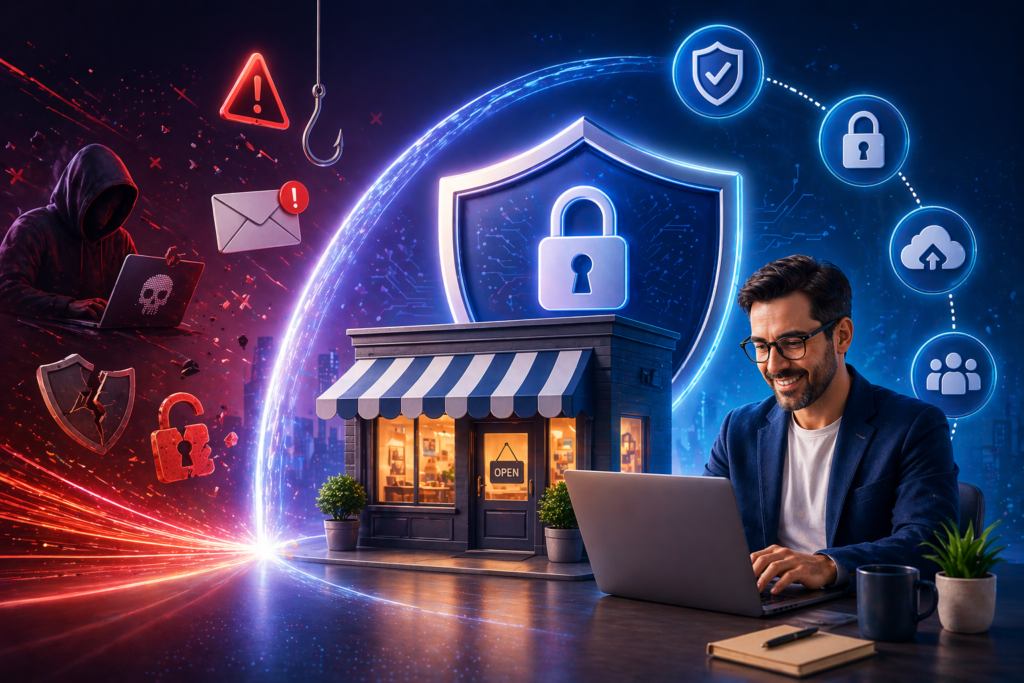
Why is cybersecurity important for small businesses?
Cybersecurity is important because small businesses are often a target of cyber attacks. If not secured, small businesses can fall victim to data breaches, financial loss and reputational damage.
What are the biggest cybersecurity threats to small businesses?
These include phishing, ransomware, poor password hygiene and insecure networks.
What are ways for small businesses to increase cybersecurity?
Small businesses can enhance cybersecurity by adopting strong passwords, implementing security software, educating their staff and following a cybersecurity checklist.
Is cybersecurity necessary for small businesses in 2026?
Yes, cybersecurity is crucial in 2026 as cybercrime is increasing and affecting all types of businesses.